
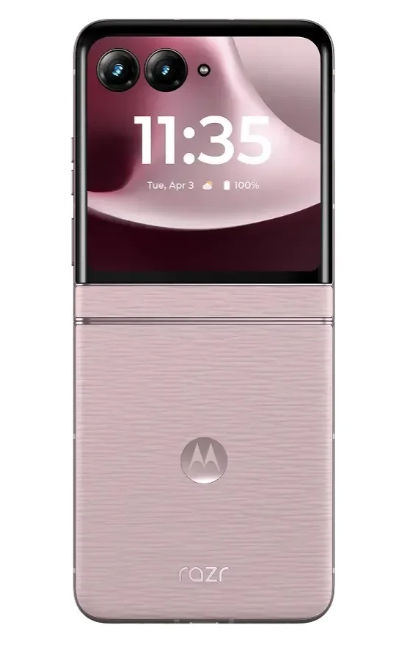
The Motorola Razr (2026) has officially arrived, bringing Motorola’s iconic clamshell foldable design into a new generation. Officially announced on April 28, 2026, the Motorola Razr (2026) starts at $800 for the 8GB/256GB configuration, positioning it as a premium yet accessible foldable in a market still dominated by pricier flagships. In this detailed review, we’ll walk through every spec of the Motorola Razr (2026) — from its design and displays to performance, cameras, battery life, and connectivity — so you can decide whether the Motorola Razr (2026) is the right foldable for you.
Motorola Razr (2026) Price and Release Date
Let’s start with what matters most: cost. The Motorola Razr (2026) was officially announced on April 28, 2026, with an MSRP of $800 for the 8GB/256GB model. At that price, the Motorola Razr (2026) undercuts many rival foldables while still delivering a premium in-hand experience. Considering the flip-phone form factor, dual cameras, and flagship-adjacent display technology packed into the Motorola Razr (2026), the $800 price tag feels reasonable for shoppers wanting to step into the foldable phone category without paying $1,000-plus.
Motorola Razr (2026) Design and Build Quality
The Motorola Razr (2026) continues Motorola’s tradition of sleek, pocketable clamshell foldables. Unfolded, the Motorola Razr (2026) measures 2.91 x 6.74 x 0.29 inches (171.30 x 73.99 x 7.25 mm). Folded, the Motorola Razr (2026) shrinks down to a compact 3.47 x 2.91 x 0.62 inches (88.1 x 74 x 15.9 mm), small enough to slip into any pocket or small bag. Weighing just 6.63 oz (188.0 g), the Motorola Razr (2026) feels light and easy to carry throughout the day.
In terms of materials, the Motorola Razr (2026) combines a plastic and vegan leather back with a durable aluminum frame, giving the Motorola Razr (2026) a distinctive, premium texture that also helps with grip. The Motorola Razr (2026) carries an IP48 rating for splash and dust resistance, along with MIL-STD 810H durability certification, meaning the Motorola Razr (2026) can handle everyday bumps, spills, and dusty conditions with confidence.
Security on the Motorola Razr (2026) is handled by a touch fingerprint sensor, and physical controls are kept minimal, with volume control and the lock/unlock key positioned on the right edge of the Motorola Razr (2026). Buyers can choose the Motorola Razr (2026) in four eye-catching Pantone colorways: Violet Ice, Hematite, Bright White, and Sporting Green — giving the Motorola Razr (2026) a distinctly fashion-forward lineup compared to many rival foldables.
Motorola Razr (2026) Display: Dual Screens for Maximum Flexibility
One of the biggest draws of the Motorola Razr (2026) is its dual-display setup. The main internal display on the Motorola Razr (2026) is a 6.9-inch AMOLED panel with an 85.07% screen-to-body ratio, folding inward to protect the screen when closed. The Motorola Razr (2026) display supports a smooth 120Hz refresh rate, HDR10+, and reaches a peak brightness of 3000 nits, ensuring content on the Motorola Razr (2026) looks vibrant even outdoors.
Resolution on the Motorola Razr (2026) comes in at 2640 x 1080 pixels with a tall 22:9 aspect ratio and a sharp 413 PPI pixel density. The Motorola Razr (2026) also supports Dolby Vision, along with an ambient light sensor and proximity sensor for smart brightness adjustments and call handling.
But the Motorola Razr (2026) doesn’t stop at one display. It also features a 3.6-inch front cover display with a 1056 x 1066 resolution, built on AMOLED technology with a 90Hz refresh rate. This front display lets Motorola Razr (2026) owners check notifications, reply to messages, take selfies with the main camera, and control music — all without unfolding the Motorola Razr (2026).
Motorola Razr (2026) Performance: MediaTek Dimensity 7450X
Powering the Motorola Razr (2026) is the MediaTek Dimensity 7450X, built on an efficient 4nm process. This octa-core chipset inside the Motorola Razr (2026) pairs 4x Cortex-A78 cores clocked at 2.6GHz with 4x Cortex-A55 cores at 2.0GHz, striking a solid balance between everyday performance and battery efficiency. Graphics on the Motorola Razr (2026) are handled by the Mali-G615 MC2 GPU, capable of smooth multitasking, casual gaming, and fluid animations across both displays.
The Motorola Razr (2026) ships with 8GB of fast LPDDR5X RAM paired with 256GB of UFS 3.1 storage. Unlike some rivals, the Motorola Razr (2026) does not support storage expansion, so buyers should choose their storage tier carefully at checkout. Out of the box, the Motorola Razr (2026) runs Android 16, giving users access to the latest software features, security patches, and foldable-specific multitasking tools.
Between the flexible display, capable chipset, and modern software, the Motorola Razr (2026) is well-equipped for everyday tasks like browsing, streaming, social media, and messaging, plus light-to-moderate gaming sessions on either the cover screen or the main display.
Motorola Razr (2026) Battery Life and Charging
Battery life is always a key consideration for foldable phones, and the Motorola Razr (2026) comes equipped with a 4800 mAh Li-Polymer battery. While that capacity is smaller than what you’d find on many traditional slab phones, it’s a competitive size for a flip-style foldable like the Motorola Razr (2026), especially with an efficient 4nm chipset helping to stretch battery life across the day.
Charging on the Motorola Razr (2026) is handled through 30.0W wired fast charging, plus 15.0W wireless charging support. This combination means the Motorola Razr (2026) can be topped up quickly at home or on the go, and owners aren’t tied to a cable if a wireless charging pad is available.
For a foldable, the Motorola Razr (2026) strikes a thoughtful balance between compact design and usable battery life, especially when leaning on the front cover display for quick tasks throughout the day, which helps conserve power on the Motorola Razr (2026).
Motorola Razr (2026) Camera System
Photography on the Motorola Razr (2026) is handled by a versatile dual camera setup on the rear. The main camera on the Motorola Razr (2026) is a 50MP sensor with PDAF (phase-detection autofocus), an F1.7 aperture, a 25mm focal length, a 1/1.95″ sensor size, and 0.8 μm pixels — specs designed to capture bright, detailed photos in a variety of lighting conditions.
Joining the main sensor, the Motorola Razr (2026) also includes a 50MP ultra-wide camera with an F2.0 aperture, a 12mm focal length, a 1/2.76″ sensor, and 0.64 μm pixels, ideal for landscapes, group shots, and creative wide-angle photography. An LED flash rounds out the rear camera hardware on the Motorola Razr (2026).
Video capabilities on the Motorola Razr (2026) are impressive for this price range, supporting 4K UHD recording at 30fps and 1080p at 60fps, backed by OIS (optical image stabilization) and HDR support. This makes the Motorola Razr (2026) a strong choice for anyone who wants smooth, stabilized footage without stepping up to a full flagship.
On the front, the Motorola Razr (2026) houses a 32MP selfie camera capable of 4K UHD video capture at 30fps. Of course, thanks to the foldable design of the Motorola Razr (2026), users can also use the rear cameras and cover display for higher-quality selfies — a signature advantage of the Razr lineup that the Motorola Razr (2026) continues to build on.
Motorola Razr (2026) Connectivity and Features
Connectivity on the Motorola Razr (2026) is thoroughly modern. It includes Bluetooth 5.4, Wi-Fi 6 and Wi-Fi 6E support with Wi-Fi Direct and hotspot capability, and compatibility with 802.11 a, b, g, n, ac, and ax standards. A USB Type-C (USB 2.0) port handles charging and data transfer on the Motorola Razr (2026). Like most modern foldables, the Motorola Razr (2026) skips the 3.5mm headphone jack, so wireless audio or a USB-C adapter will be needed.
The sensor suite on the Motorola Razr (2026) includes an accelerometer, gyroscope, ambient light sensor, and proximity sensor, supporting smooth navigation, adaptive brightness, and smart display behavior when folding and unfolding the Motorola Razr (2026). For location services, the Motorola Razr (2026) supports GPS, A-GPS, Glonass, Galileo, QZSS, Cell ID, and Wi-Fi positioning, ensuring accurate location tracking across regions.
NFC is also included on the Motorola Razr (2026), enabling contactless payments and quick device pairing. For audio, the Motorola Razr (2026) features an earpiece along with multiple speakers, delivering clear sound for calls, media, and notifications.
On the cellular side, the Motorola Razr (2026) supports an extensive range of 5G bands (n1, n2, n3, n5, n7, n12, n14, n20, n25, n26, n28, n29, n30, n38, n40, n41, n48, n66, n70, n71, n77, n78), making the Motorola Razr (2026) ready for next-generation networks nearly everywhere. It also supports a wide array of LTE bands, TDD bands, and 3G bands, ensuring the Motorola Razr (2026) works reliably across a broad range of carriers worldwide. The Motorola Razr (2026) supports dual SIM functionality with both Nano SIM and eSIM options, giving users flexibility for travel or dual-number setups.
Motorola Razr (2026) vs the Competition
At $800, the Motorola Razr (2026) competes directly with other compact flip-style foldables. What sets the Motorola Razr (2026) apart is its combination of a large, vibrant 6.9-inch main display, a genuinely useful 3.6-inch cover screen, dual 50MP cameras with OIS-backed 4K video, and stylish Pantone color options. Few foldables in this price bracket manage to balance style, functionality, and camera quality as effectively as the Motorola Razr (2026) does.
Should You Buy the Motorola Razr (2026)?
The Motorola Razr (2026) is an easy recommendation for anyone who wants the novelty and practicality of a foldable phone without spending flagship-foldable money. The Motorola Razr (2026) delivers a vibrant 120Hz AMOLED main display, a genuinely functional cover screen, dual 50MP rear cameras with 4K video and OIS, and broad 5G connectivity — all wrapped in a compact, pocketable design.
Where the Motorola Razr (2026) shows some compromise is battery capacity — at 4800 mAh, it’s smaller than what you’d find on non-folding phones in the same price range — and the lack of expandable storage may be a downside for users who need more than 256GB. Still, for a flip foldable, the Motorola Razr (2026) manages battery life reasonably well thanks to its efficient chipset.
Overall, for the price, the Motorola Razr (2026) punches well above expectations in the foldable category. If you want a stylish, compact phone with a genuinely useful cover display, capable dual cameras, and modern connectivity, the Motorola Razr (2026) is one of the smartest foldable picks available today.
Motorola Razr (2026) Frequently Asked Questions
How much does the Motorola Razr (2026) cost? The Motorola Razr (2026) starts at $800 for the 8GB/256GB configuration, and that is currently the only memory tier offered at launch.
What chipset does the Motorola Razr (2026) use? The Motorola Razr (2026) is powered by the MediaTek Dimensity 7450X, an octa-core 4nm chipset paired with a Mali-G615 MC2 GPU.
Does the Motorola Razr (2026) support wireless charging? Yes, the Motorola Razr (2026) supports 15.0W wireless charging in addition to 30.0W wired fast charging.
What colors is the Motorola Razr (2026) available in? The Motorola Razr (2026) comes in four Pantone shades: Violet Ice, Hematite, Bright White, and Sporting Green.
Is the Motorola Razr (2026) water resistant? The Motorola Razr (2026) carries an IP48 rating for splash and dust resistance, along with MIL-STD 810H certification for added durability.
Can you expand storage on the Motorola Razr (2026)? No, the Motorola Razr (2026) does not support microSD storage expansion, so the 256GB of built-in UFS 3.1 storage is fixed.
Motorola Razr (2026): Final Verdict
In summary, the Motorola Razr (2026) proves that foldable phones don’t need to cost over $1,000 to feel premium. Between its dual AMOLED displays, dual 50MP OIS-backed cameras, MIL-STD 810H durability, and broad 5G band support, the Motorola Razr (2026) checks nearly every box that foldable phone buyers care about. If you’re in the market for a new flip phone around the $800 mark, the Motorola Razr (2026) absolutely deserves a spot on your shortlist.