
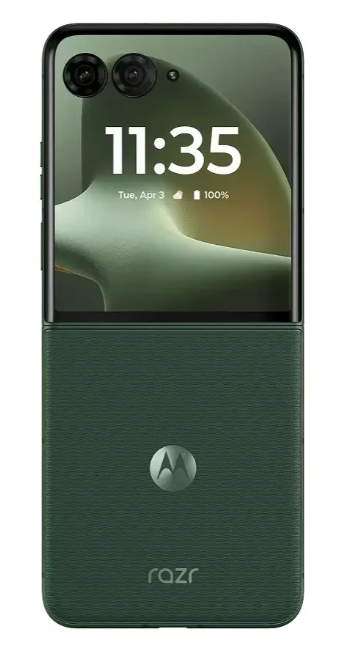
The Motorola Razr Plus (2026) has officially arrived as Motorola’s premium flip-style foldable for the year. Officially announced on April 28, 2026, the Motorola Razr Plus (2026) starts at $1100 for the 12GB/256GB configuration, positioning it as a true flagship foldable that goes head-to-head with the biggest names in the category. In this in-depth review, we’ll walk through every spec of the Motorola Razr Plus (2026) — from its design and dual displays to performance, cameras, battery life, and connectivity — so you can decide whether the Motorola Razr Plus (2026) is worth the investment.
Motorola Razr Plus (2026) Price and Release Date
Let’s start with the numbers that matter most. The Motorola Razr Plus (2026) was officially announced on April 28, 2026, with an MSRP of $1100 for the single 12GB/256GB configuration. At that price, the Motorola Razr Plus (2026) sits firmly in flagship territory, and it justifies that positioning with a faster processor, a higher refresh-rate display, and a larger cover screen than Motorola’s standard Razr lineup. For buyers who want the most capable flip foldable Motorola currently offers, the Motorola Razr Plus (2026) is the clear top-tier choice.
Motorola Razr Plus (2026) Design and Build Quality
The Motorola Razr Plus (2026) carries forward Motorola’s signature clamshell foldable design while refining the details. Unfolded, the Motorola Razr Plus (2026) measures 6.75 x 2.91 x 0.28 inches (171.4 x 74 x 7.1 mm), making it slightly slimmer than many rival foldables. Folded, the Motorola Razr Plus (2026) shrinks down to a pocket-friendly 3.46 x 2.91 x 0.60 inches (88.09 x 74 x 15.3 mm). Weighing just 6.67 oz (189.0 g), the Motorola Razr Plus (2026) feels light in hand and easy to carry all day.
In terms of materials, the Motorola Razr Plus (2026) combines a plastic and vegan leather back with a sturdy aluminum frame, giving the Motorola Razr Plus (2026) a distinctive, tactile finish. The Motorola Razr Plus (2026) carries an IP48 rating for water resistance, meaning the Motorola Razr Plus (2026) can handle splashes and light exposure to moisture without issue.
Security on the Motorola Razr Plus (2026) is handled through a touch fingerprint sensor, and physical controls stay minimal, with volume control and the lock/unlock key positioned on the right edge of the Motorola Razr Plus (2026). At launch, the Motorola Razr Plus (2026) is available in a single sophisticated colorway: Pantone Mountain View, giving the Motorola Razr Plus (2026) a refined, understated look compared to more colorful foldables on the market.
Motorola Razr Plus (2026) Display: Dual Screens Built for Speed
One of the standout features of the Motorola Razr Plus (2026) is its display technology. The main internal display on the Motorola Razr Plus (2026) is a 6.9-inch AMOLED panel with an 85.17% screen-to-body ratio. Unlike many rivals, the Motorola Razr Plus (2026) pushes refresh rates to an impressive 165Hz, paired with HDR support and a peak brightness of 3000 nits, ensuring everything on the Motorola Razr Plus (2026) looks fluid and vibrant.
Resolution on the Motorola Razr Plus (2026) comes in at 2640 x 1084 pixels with a tall 22:9 aspect ratio and a sharp 414 PPI pixel density. For durability, the Motorola Razr Plus (2026) uses Ultra Thin Glass (UTG) protection on its folding panel, along with Dolby Vision support, an ambient light sensor, and a proximity sensor for smart, adaptive behavior.
The Motorola Razr Plus (2026) doesn’t stop at one screen. Its front cover display measures a generous 4.0 inches with a 1272 x 1080 resolution, also built on AMOLED technology and matching the main display’s fast 165Hz refresh rate. The cover display on the Motorola Razr Plus (2026) additionally supports HDR and Dolby Vision, and is protected by scratch-resistant Corning Gorilla Glass Victus. This makes the Motorola Razr Plus (2026) cover screen genuinely useful for full apps, not just quick glances, setting the Motorola Razr Plus (2026) apart from more basic foldables.
Motorola Razr Plus (2026) Performance: Snapdragon 8s Gen 3
Powering the Motorola Razr Plus (2026) is the Snapdragon 8s Gen 3 (SM8635), built on a 4nm process. This octa-core chipset inside the Motorola Razr Plus (2026) combines a single Cortex-X4 core at 3.0GHz, four Cortex-A720 cores at 2.8GHz, and three Cortex-A520 cores at 2.0GHz, delivering genuinely flagship-level performance. Graphics on the Motorola Razr Plus (2026) are handled by the Adreno 735 GPU, capable of demanding games and smooth multitasking across both displays.
The Motorola Razr Plus (2026) ships with 12GB of fast LPDDR5X RAM paired with 256GB of UFS 4.0 storage, one of the fastest storage standards available today. As with most foldables, the Motorola Razr Plus (2026) does not support storage expansion, so the fixed 256GB capacity is worth considering for heavy media users. Out of the box, the Motorola Razr Plus (2026) runs Android 16, giving users the latest software features and foldable-optimized multitasking tools.
Between the Snapdragon 8s Gen 3, 12GB of RAM, and UFS 4.0 storage, the Motorola Razr Plus (2026) is built to handle demanding apps, multitasking, and gaming with ease, making the Motorola Razr Plus (2026) a genuine flagship-tier performer in a foldable body.
Motorola Razr Plus (2026) Battery Life and Charging
Battery capacity is always a key question for compact foldables, and the Motorola Razr Plus (2026) comes equipped with a 4500 mAh Li-Polymer battery. While that’s a modest capacity by slab-phone standards, it’s a reasonable size for a flip-style foldable, and the Motorola Razr Plus (2026) pairs it with an efficient chipset to help stretch battery life through the day.
Charging on the Motorola Razr Plus (2026) is fast and flexible. It supports 45.0W wired fast charging, 15.0W Qi wireless charging, and reverse wired charging, letting the Motorola Razr Plus (2026) top up other accessories when needed. This combination of speed and versatility means the Motorola Razr Plus (2026) rarely has to be tethered to a charger for long, and owners can top up quickly whether at a desk or on the move.
Motorola Razr Plus (2026) Camera System
Photography on the Motorola Razr Plus (2026) is handled by a capable dual camera system on the rear. The main camera on the Motorola Razr Plus (2026) is a 50MP sensor with OIS (optical image stabilization) and PDAF (phase-detection autofocus), an F1.8 aperture, a 24mm focal length, a 1/1.95″ sensor size, and 0.8 μm pixels — a combination built for sharp, stabilized shots in a wide range of lighting conditions.
Joining the main sensor, the Motorola Razr Plus (2026) also includes a 50MP ultra-wide camera with an F2.0 aperture, a 12mm focal length, a 1/2.76″ sensor, and 0.64 μm pixels, perfect for landscapes and creative wide shots. An LED flash rounds out the rear camera hardware on the Motorola Razr Plus (2026).
Video capabilities on the Motorola Razr Plus (2026) are especially strong for a foldable, supporting 4K UHD recording at 60fps as well as 1080p at 60fps. The Motorola Razr Plus (2026) also brings OIS, HDR, time-lapse video, object tracking, EIS (electronic image stabilization), and Dolby Vision HDR to the table — a genuinely comprehensive video feature set that puts the Motorola Razr Plus (2026) ahead of many competing foldables.
On the front, the Motorola Razr Plus (2026) houses a 32MP selfie camera also capable of 4K UHD video at 60fps. Thanks to the foldable design, Motorola Razr Plus (2026) owners can additionally use the rear cameras with the cover display for higher-quality selfies and vlogging, a signature Razr advantage that the Motorola Razr Plus (2026) continues to refine.
Motorola Razr Plus (2026) Connectivity and Features
Connectivity on the Motorola Razr Plus (2026) is thoroughly future-proofed. It includes Bluetooth 5.4, and — notably — the Motorola Razr Plus (2026) supports Wi-Fi 7 in addition to Wi-Fi 6 and Wi-Fi 6E, along with Wi-Fi Direct and hotspot capability. The Motorola Razr Plus (2026) also supports the full 802.11 a, b, g, n, ac, and ax standards. A USB Type-C (USB 2.0) port handles charging and data transfer on the Motorola Razr Plus (2026), though like most modern foldables, the Motorola Razr Plus (2026) skips the 3.5mm headphone jack.
The sensor suite on the Motorola Razr Plus (2026) is more extensive than most foldables, including an accelerometer, gyroscope, compass, Hall sensor (for flip cover detection), barometer, ambient light sensor, and proximity sensor. For location services, the Motorola Razr Plus (2026) supports GPS, A-GPS, Glonass, Galileo, BeiDou, Cell ID, and Wi-Fi positioning, ensuring accurate positioning worldwide.
NFC is also included on the Motorola Razr Plus (2026), enabling contactless payments and quick pairing. For audio, the Motorola Razr Plus (2026) features an earpiece along with multiple speakers for clear calls and immersive media playback.
On the cellular side, the Motorola Razr Plus (2026) supports an extensive range of 5G bands (n1, n2, n3, n5, n7, n12, n14, n20, n25, n26, n28, n29, n30, n38, n40, n41, n48, n66, n70, n71, n77, n78), plus broad LTE, TDD, and 3G band coverage, making the Motorola Razr Plus (2026) compatible with carriers around the world. Data speeds on the Motorola Razr Plus (2026) reach LTE-A Pro Cat 20 (2000/150 Mbit/s), and the device supports dual SIM functionality with both Nano SIM and eSIM options.
Motorola Razr Plus (2026) vs the Competition
At $1100, the Motorola Razr Plus (2026) competes directly with the top flip-style foldables on the market. What sets the Motorola Razr Plus (2026) apart is its combination of a 165Hz main display, an equally fast 165Hz cover screen, flagship Snapdragon 8s Gen 3 performance, and a camera system with genuinely advanced video features like Dolby Vision HDR and object tracking. Few foldables in this price bracket manage to match the Motorola Razr Plus (2026) across display speed, performance, and video capability all at once.
Should You Buy the Motorola Razr Plus (2026)?
The Motorola Razr Plus (2026) is an easy recommendation for anyone who wants the most capable flip foldable Motorola makes and doesn’t mind paying a flagship price. The Motorola Razr Plus (2026) delivers a fast, vibrant 165Hz main display, a large and genuinely functional 165Hz cover screen, flagship-tier Snapdragon 8s Gen 3 performance, and dual 50MP rear cameras with advanced video features.
Where the Motorola Razr Plus (2026) shows some trade-offs is battery capacity — at 4500 mAh, it’s on the smaller side even for a foldable — and the lack of expandable storage may concern users who need more than 256GB. Still, fast 45W wired and 15W wireless charging help offset the smaller cell, keeping the Motorola Razr Plus (2026) topped up throughout a busy day.
Overall, the Motorola Razr Plus (2026) stands out as one of the most complete flip foldables available in 2026. If you want a premium, compact phone with dual high-refresh displays, flagship performance, and standout video capabilities, the Motorola Razr Plus (2026) deserves serious consideration.
Motorola Razr Plus (2026) Frequently Asked Questions
How much does the Motorola Razr Plus (2026) cost? The Motorola Razr Plus (2026) launches at $1100 for the 12GB/256GB configuration, which is currently the only memory tier available.
What chipset does the Motorola Razr Plus (2026) use? The Motorola Razr Plus (2026) is powered by the Snapdragon 8s Gen 3 (SM8635), an octa-core 4nm chipset paired with the Adreno 735 GPU.
Does the Motorola Razr Plus (2026) support wireless charging? Yes, the Motorola Razr Plus (2026) supports 15.0W Qi wireless charging, plus 45.0W wired fast charging and reverse wired charging.
What color options does the Motorola Razr Plus (2026) come in? At launch, the Motorola Razr Plus (2026) is available in a single Pantone Mountain View colorway.
Is the Motorola Razr Plus (2026) water resistant? The Motorola Razr Plus (2026) carries an IP48 rating for water resistance, though it is not rated for dust resistance.
Does the Motorola Razr Plus (2026) support Wi-Fi 7? Yes, the Motorola Razr Plus (2026) supports Wi-Fi 7 in addition to Wi-Fi 6 and Wi-Fi 6E, making it one of the more future-proofed foldables on connectivity.
Motorola Razr Plus (2026): Final Verdict
In summary, the Motorola Razr Plus (2026) proves that a flip foldable can deliver genuine flagship performance without sacrificing the compact, pocketable form factor that made the Razr name famous. Between its dual 165Hz AMOLED displays, Snapdragon 8s Gen 3 chipset, dual 50MP OIS-backed cameras with Dolby Vision HDR video, and Wi-Fi 7 connectivity, the Motorola Razr Plus (2026) checks nearly every box that premium foldable buyers care about. If you’re in the market for a top-tier flip phone in 2026, the Motorola Razr Plus (2026) absolutely deserves a spot on your shortlist.